
Electrical Safety Upgrades Every Homeowner Should Consider
A house can pass for years with wiring that works and still lack the protection a new home gets as standard. The upgrades below are the ones that close those gaps, each with a guide of its own if you want the detail. None of them changes how you use the house day to day, which is part of why they get put off.
Ground Fault Protection Where There Is Water
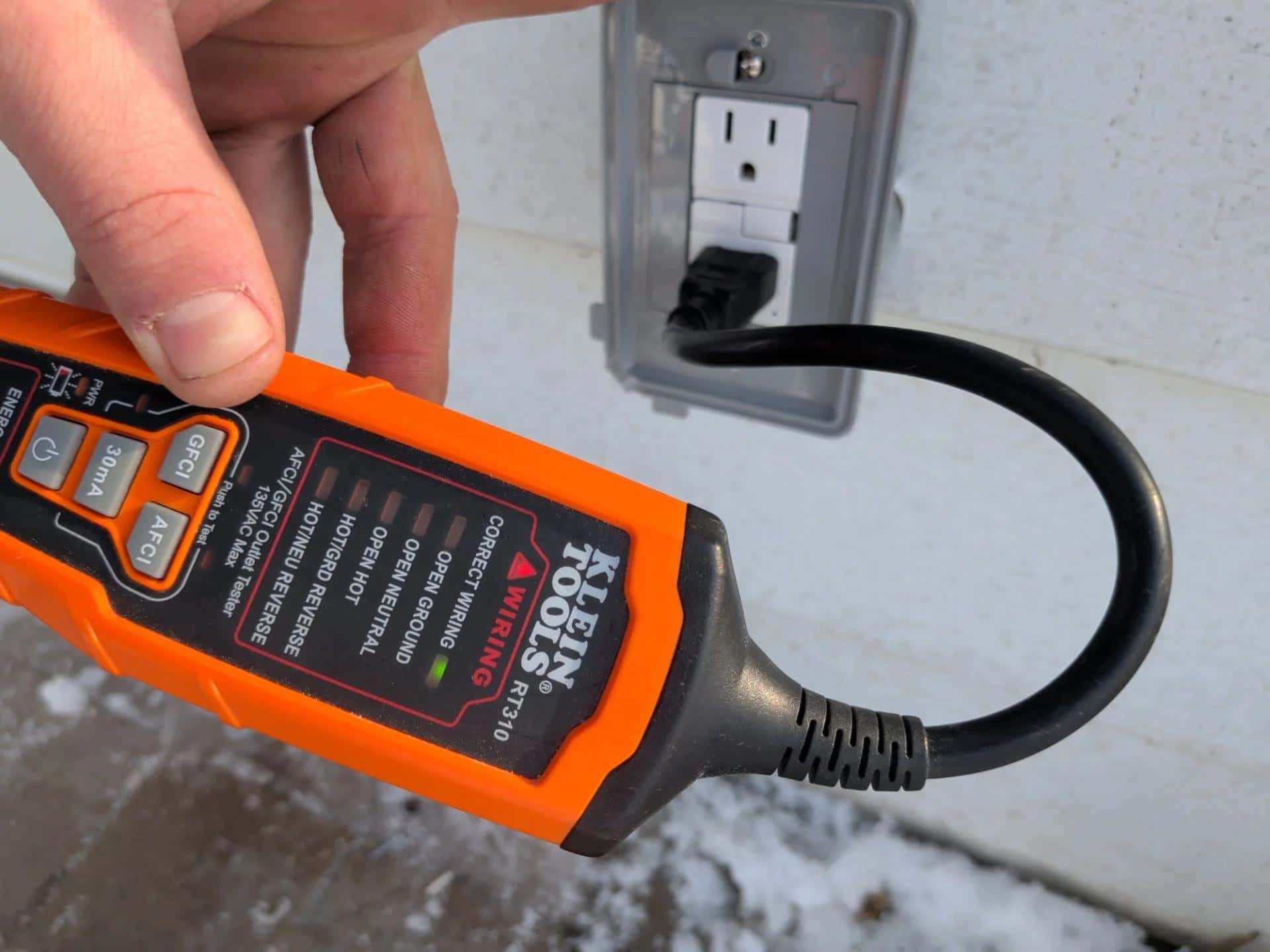
A ground fault circuit interrupter (GFCI) compares the current going out on a circuit with the current coming back and cuts the power almost instantly if the two differ. That mismatch means current is escaping, possibly through water or a person. The Ontario code calls for GFCI protection in bathrooms, near sinks, at outdoor receptacles, in crawl spaces and around pools and hot tubs. That list has grown over the years, so an older house often has fewer protected outlets than the code now asks for. Our GFCI guide covers the locations, the monthly test and when a GFCI breaker makes more sense than several outlets.
Arc Fault Protection Against Hidden Wiring Damage
An arc fault happens when current jumps a gap in a damaged wire, for example where a nail has nicked a cable or old insulation has broken down. The arcing can be hot enough to start a fire inside a wall, often without drawing the kind of current that trips an ordinary breaker. An arc fault circuit interrupter (AFCI) breaker reads the pattern of the current and shuts the circuit off when it sees dangerous arcing. New construction and major renovations need AFCIs in bedrooms and most living areas, while an existing home can add them by swapping breakers, provided the panel accepts AFCI versions. The arc fault guide explains the retrofit and when an older panel stands in the way.
Whole-Home Surge Protection at the Panel
Surges come from the grid, from power coming back after an outage and from large appliances inside the house cycling on and off. A whole-home surge protector is mounted at your panel and sends a surge to ground before it reaches the branch circuits. It works best with plug-in surge protectors on computers and televisions, and a panel upgrade is a good moment to add it. Read more in our surge protection guide.
Tamper-Resistant Receptacles for Homes With Children
A tamper-resistant receptacle has shutters behind the slots that open only when both prongs of a plug press in at once, so a key or a hairpin pushed into one slot meets plastic. The Ontario code requires them in new construction and major renovations. In an older home they are an inexpensive swap, and with young children in the house it makes sense to change every outlet they can reach.
Wired Smoke and Carbon Monoxide Alarms
Battery alarms only help while someone keeps the batteries fresh. We install hardwired smoke and carbon monoxide (CO) detectors that are interconnected, so when one sounds, they all do, and a fire in the basement wakes the bedrooms upstairs. Test each alarm with its button on a regular schedule, and replace any that fail the test.
Replacing a Fuse Box or a Recalled Panel
A fuse box dates from a time when houses used far less electricity, and insurers in Ontario often ask about it when they write a policy. Some older breaker panels have a worse problem: their breakers may not trip when a circuit is overloaded, and we recommend replacing them even when nothing seems wrong. A new breaker panel needs a permit, and we include the Electrical Safety Authority (ESA) inspection in the job.
Deciding Where to Start
Few homes need every upgrade at once, and the order depends on what the house already has. A failed GFCI near a sink, a fuse box or a recalled panel is the place to start; AFCI breakers and surge protection can follow, and both fit at the panel. The Home Electrical Health Check shows which of these your home needs, since it covers the panel, GFCI and AFCI protection, outlet grounding and the smoke and CO alarms, with a written report and photos the same day. For the habits that go with these upgrades, see our ten electrical safety tips.
Related Articles
• 10 Electrical Safety Tips Every Ontario Homeowner Should Know
• GFCI Outlets: Why They Matter and Where You Need Them in Your Ontario Home
• Arc Fault Breakers (AFCIs): The Life-Saving Technology Your Home Might Be Missing
Our licensed electricians are ready to help. Same-day response, flat-rate pricing, lifetime warranty.
Learn More about Health Check →Free Estimate
Flat-Rate Pricing. No Surprises. Same-Day Response.
Call Us
(289) 210-5221Service Area
Hamilton, Niagara & Southern Ontario
Hours
Open 24 hours, 7 days a week
Our Promise
Satisfaction Guaranteed or We Come Back Free