
10 Electrical Safety Tips Every Ontario Homeowner Should Know
Electrical trouble at home often starts with something small that nobody noticed, such as a cord pinched under a bed leg or a ground fault circuit interrupter (GFCI) that has not been tested in years. Most of the ten habits below cost nothing, and they cover the parts of the house where small problems tend to start. For a room by room look at what to watch for, see our guide to avoiding common electrical hazards.
Outlets, Cords and Power Bars
Tip 1: Spread the load. A single outlet or power bar feeding a space heater, a hair dryer and a few chargers can carry more current than its circuit is rated for, and the extra turns into heat in the wiring. Never plug one extension cord or power bar into another. If a microwave, a space heater or another heavy appliance trips a breaker whenever something else runs, the fix is a circuit that serves that appliance alone, and that new circuit is permit work that the Electrical Safety Authority (ESA) inspects.
Tip 2: Replace a damaged cord the day you notice it. Cracked or frayed insulation can leave live conductors exposed, and electrical tape wrapped over the damage is no repair.
Tip 3: Give cords room to breathe. A cord buried under a rug or crushed behind a dresser can overheat and wear through where nobody sees it, so route cords in the open and unplug anything that feels warm.
Water and Children
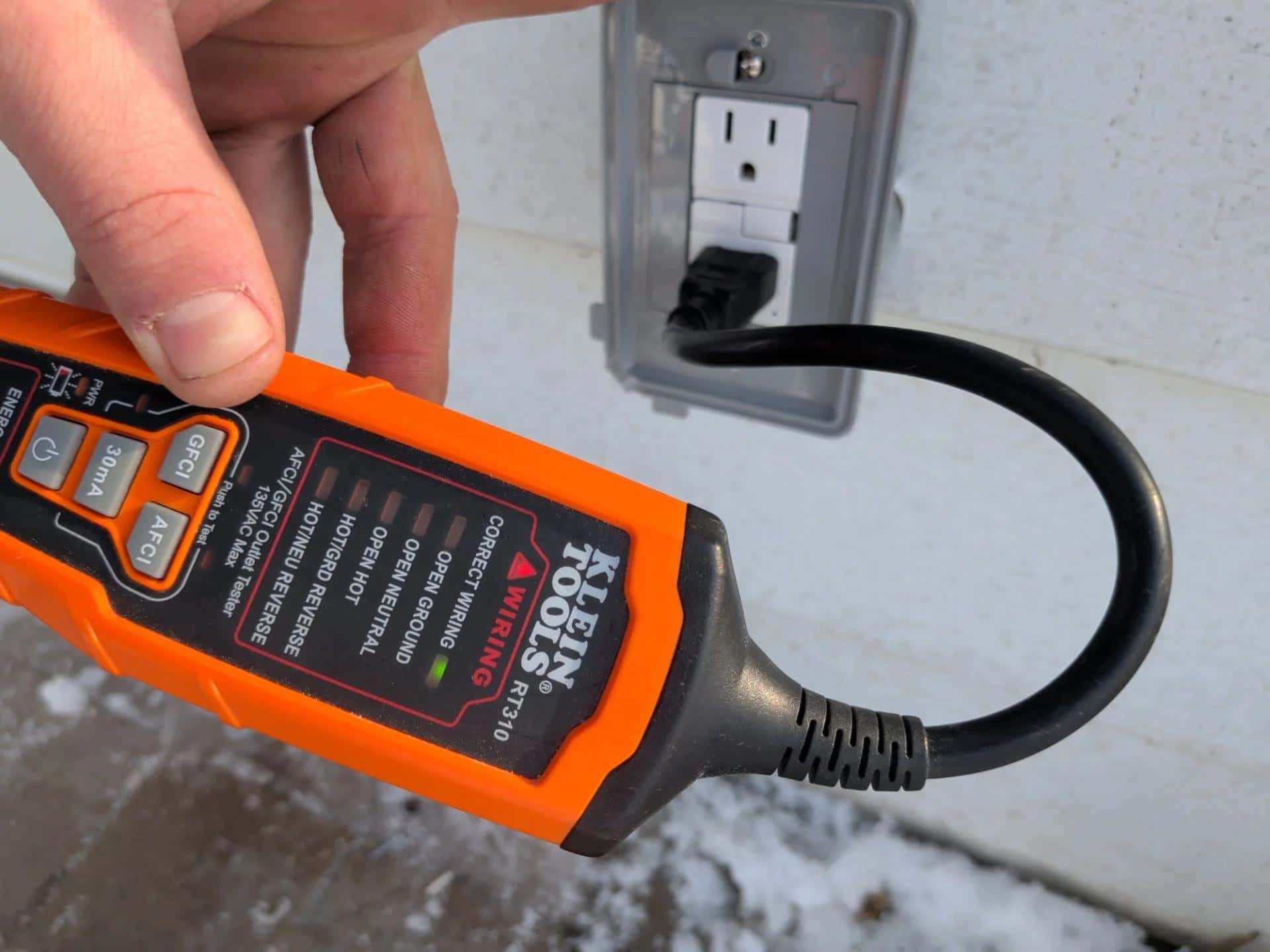
Tip 4: Test your GFCIs every month. A GFCI shuts a circuit off the moment it senses current leaking away, whether through water or through someone touching a fault. Under the Ontario code they belong in bathrooms, within 1.5 metres of any sink, in crawl spaces, at outdoor receptacles, and close to pools and hot tubs. Press the test button, check that the outlet goes dead, then press reset, and replace any GFCI that will not trip or will not come back on. Our GFCI guide has the details.
Tip 5: Keep water and electricity apart. Dry your hands before you touch a plug or a switch, keep hair dryers and radios well back from the tub and the sink, and never reach for an appliance that has fallen into water until its power is off.
Tip 6: Make outlets child-safe. Tamper-resistant receptacles have built-in shutters that stay closed unless both prongs of a plug push in together, so a curious child cannot poke a key or a pin into the slot. The code requires them in new homes and major renovations, and in an older house they are an inexpensive upgrade wherever little hands can reach.
Warning Signs That Mean It Is Time to Call
Tip 7: Treat these signs as a reason to call an electrician. A breaker that trips again and again is protecting an overloaded or faulty circuit, and resetting it without finding the cause lets heat build. An outlet or a switch plate that is warm to the touch, buzzes or has dark marks around it usually means a connection has worked loose or is carrying too much. Lights that dim when a big appliance starts mean the circuit, or the panel, is close to its limit. A burning smell, popping from the panel or sparks are urgent: turn off that circuit if you can do it safely, keep away from the panel if it is the source, and call right away.
Panels, Inspections and Knowing Your Shutoff
Tip 8: Know where your panel is and how to shut the power off. Show everyone in the house where the panel is, which switch is the main and how to turn it off in an emergency. A panel with every circuit labelled saves time when a breaker trips or when one room has to be shut off for a repair.
Tip 9: Find out what is behind the walls of an older house. A fuse box, a recalled panel whose breakers may not trip, aluminum branch wiring from the 1960s and 1970s or knob and tube wiring from before the late 1940s all deserve an electrician's assessment. Homeowners in Ontario may do their own electrical work at home, provided they take out an ESA permit and the work is inspected. Panel and service work, though, belongs with a licensed electrical contractor.
Tip 10: Book an inspection when you move in, or if nobody has looked at the system in a long time. Our Home Electrical Health Check is a flat $149.99. A licensed electrician checks the panel and breakers, outlet grounding, GFCI and arc fault protection and every smoke and carbon monoxide alarm, and you get a written report with photos by email that day. If the report turns up gaps, our guide to safety upgrades every homeowner should consider explains each fix.
Related Articles
• Avoiding Common Electrical Hazards in Your Home
• Electrical Safety Upgrades Every Homeowner Should Consider
• GFCI Outlets: Why They Matter and Where You Need Them in Your Ontario Home
Our licensed electricians are ready to help. Same-day response, flat-rate pricing, lifetime warranty.
Learn More about Health Check →Free Estimate
Flat-Rate Pricing. No Surprises. Same-Day Response.
Call Us
(289) 210-5221Service Area
Hamilton, Niagara & Southern Ontario
Hours
Open 24 hours, 7 days a week
Our Promise
Satisfaction Guaranteed or We Come Back Free