
Battery Backup vs Generator: The Pros and Cons for Hamilton Homeowners
The backup power conversation used to be simple: if you wanted your home to keep running during an outage, you got a generator. But the rise of home battery systems has given Hamilton homeowners a genuine alternative to consider. Products from manufacturers like Tesla, Enphase, and others have made battery backup a viable option for some households. The question is whether a battery system, a generator, or a combination of both is the right choice for your situation. Here is an honest comparison to help you decide.
How Battery Backup Systems Work
A home battery system stores electricity in lithium-ion batteries that are mounted on your wall, typically in a garage or utility room. The battery charges from the electrical grid during normal operation or from solar panels if you have them. When the grid goes down, the battery automatically switches to supply power to designated circuits in your home. The transition is nearly instantaneous, faster than a standby generator, with some systems switching in under a hundredth of a second. The amount of power available and how long it lasts depend on the battery capacity, measured in kilowatt-hours, and how much electricity your home is drawing.
How Standby Generators Work
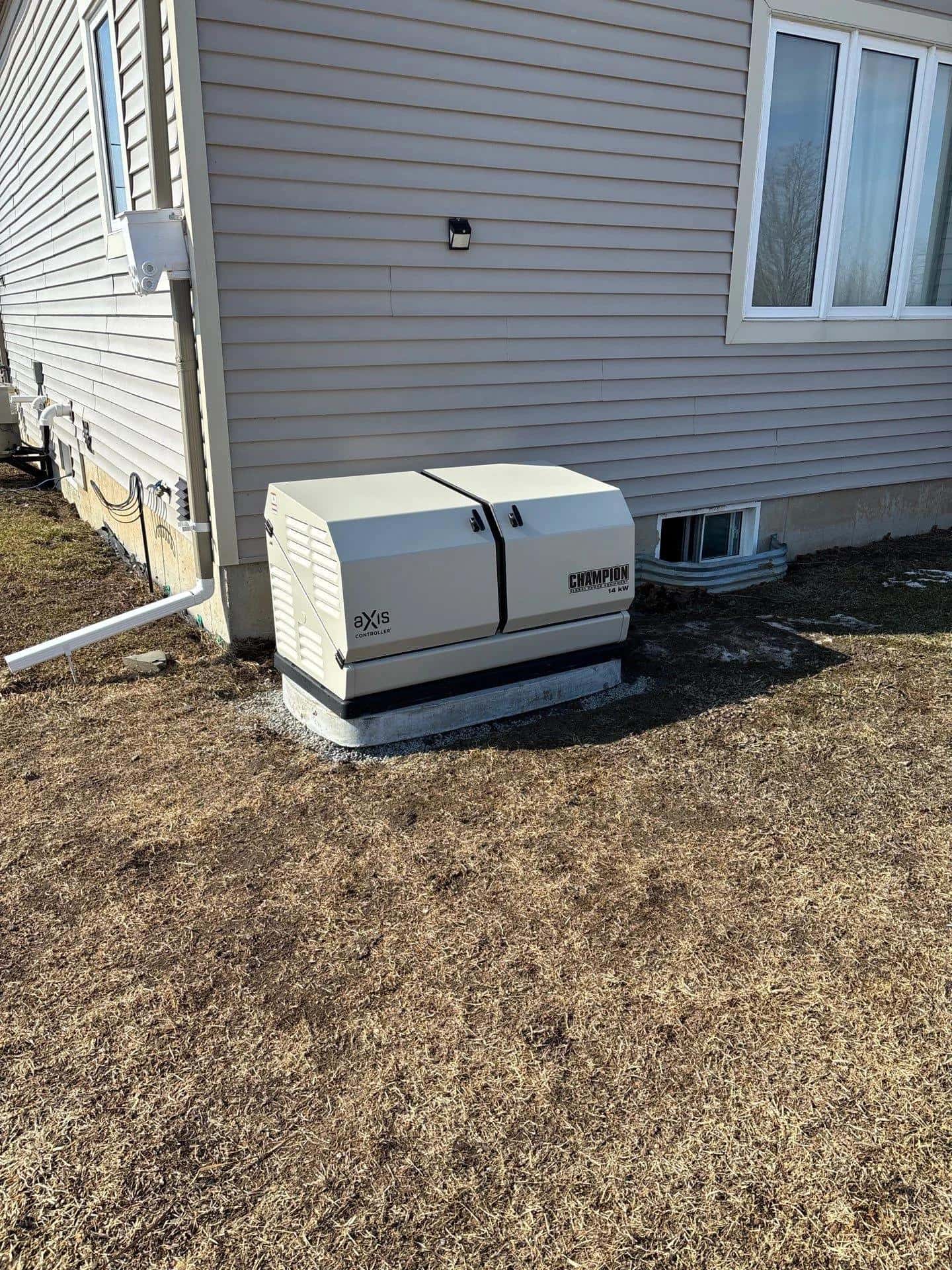
A standby generator creates electricity on demand by burning natural gas or propane to run an internal combustion engine connected to an alternator. When the power goes out, the automatic transfer switch detects the outage and starts the generator within seconds. As long as it has a fuel supply, the generator can run indefinitely, producing a continuous output of 10 kW to 26 kW or more depending on the model. This makes generators particularly well-suited for long outages where the duration is unpredictable.
Runtime: Where Generators Have the Advantage
This is the most significant difference between the two technologies for most Hamilton homeowners. A single home battery unit typically stores between 10 and 15 kilowatt-hours of energy. If your home is drawing 5 kW during an outage, which is modest, a single battery will last roughly two to three hours. Adding more battery units extends the runtime but also multiplies the cost. A standby generator connected to your natural gas line has essentially unlimited runtime because the gas supply continues flowing through the outage. For Hamilton and Niagara, where ice storms and severe weather can knock out power for days at a time, this difference in runtime is a critical consideration.
Cost Comparison
A single home battery unit installed in Ontario typically costs between $12,000 and $18,000. To achieve whole-home coverage with meaningful runtime, most homes would need two or more units, pushing the cost to $25,000 to $40,000 or beyond. A whole-home standby generator with full installation in the Hamilton area typically ranges from $7,000 to $15,000, offering significantly more power and unlimited runtime for a fraction of the battery cost. Where batteries become more cost-competitive is when paired with solar panels, because the solar array can recharge the battery during the day, extending outage coverage and reducing your electricity bill during normal operation.
Environmental and Noise Considerations
Battery systems produce zero emissions during operation and run silently, which makes them appealing for environmentally conscious homeowners and for properties where generator noise could be a concern. Standby generators do produce exhaust and noise, though modern units are significantly quieter than older models and meet stringent emission standards. If your home is on a small lot in a dense Hamilton neighbourhood, the noise factor may be worth weighing. If you have solar panels and want to maximize their value, a battery system lets you store and use your own solar energy rather than sending it back to the grid.
The Hybrid Approach
Increasingly, Hamilton homeowners are asking about combining a battery system with a standby generator to get the best of both worlds. In a hybrid setup, the battery handles short outages and brief power interruptions seamlessly and silently, while the generator takes over for extended outages that would deplete the battery. This approach provides the instant switchover of a battery with the unlimited runtime of a generator. The combined cost is higher than either system alone, but for homeowners who want the ultimate in power reliability, it is an option worth exploring.
Whether you are leaning toward a battery, a generator, or a hybrid system, the right choice depends on your home, your budget, your outage history, and your priorities. Remarkable Electric works with Hamilton and Niagara homeowners to evaluate all of these factors and recommend the solution that actually fits. We install generators from Generac, Briggs & Stratton, and Champion, and we can integrate battery systems into your backup power plan. Contact us for a free consultation and get a clear picture of what makes sense for your home.
Related Articles
• Standby Generator vs Portable Generator: Which Is Better for Ontario Homes?
• Do I Need a Whole-Home Generator? 5 Signs It's Time
• Power Outages in Hamilton & Niagara: Why They're Getting Worse and What You Can Do
Our licensed electricians are ready to help. Same-day response, flat-rate pricing, lifetime warranty.
Learn More about Backup Power & Generators →Free Estimate
Flat-Rate Pricing. No Surprises. Same-Day Response.
Call Us
(289) 210-5221Service Area
Hamilton, Niagara & Southern Ontario
Hours
Open 24 hours, 7 days a week
Our Promise
Satisfaction Guaranteed or We Come Back Free